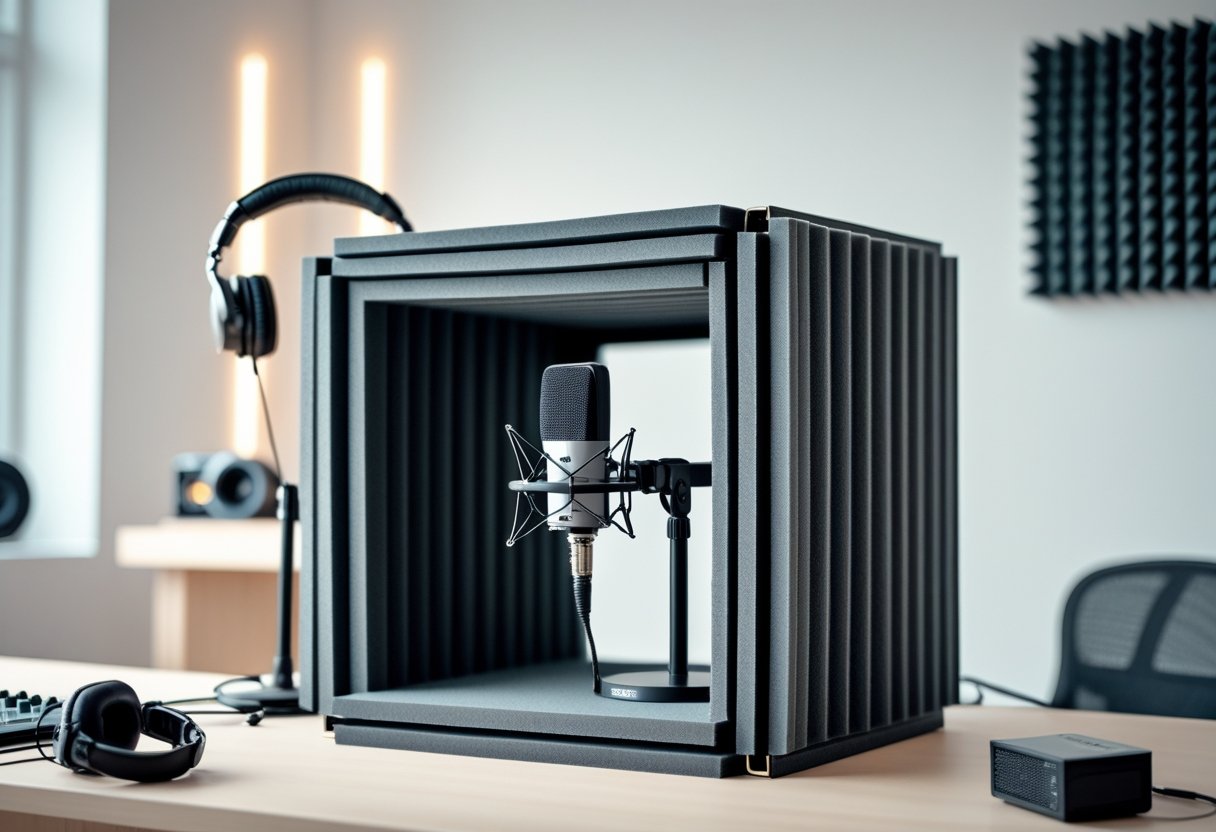
The Carry On Vocal Booth Pro aims to give voice artists a compact, moveable space that reduces unwanted sound when recording. It folds into a travel-friendly shape and can be carried like a garment bag. The design focuses on portability while keeping key acoustic features that help cut side and rear noise.
Users value how the unit mounts to a mic stand and includes a small shelf for accessories. A built-in LED light runs on AAA batteries. The booth fits into travel kits easily, but it can’t hold large audio interfaces and a laptop at the same time. Many performers place their interface or laptop on a nearby table instead.
Setup is straightforward once the user learns the unpacking steps. The panels snap together and the fabric and internal padding aim to absorb reflections. The booth works best for reducing room reflections and side noise, though it leaves some sound coming from directly behind the singer or speaker.
Stability is a common concern. When attached to a stand, the unit may feel slightly wobbly, so heavier stands or careful positioning help. The portable booth’s light weight supports travel but may trade off rigidity during sessions.
Sound absorption comes from the booth’s layered panels and internal lining. This helps tame reverberation and reduces room color in recordings. For many users, the booth noticeably lowers ambient noise and improves clarity, especially compared with recording in an open hotel room or makeshift setup.
Accessories and extras shape the user experience. A few performers suggest adding a rear flap or hood to block noise behind the performer. Others like the shelving option for holding a microphone or small gear. The booth pairs with different microphone types, but results vary by mic pattern and source distance.
Practical travel notes:
- Packs down to a slim form that fits into typical carry-on gear.
- May double as a garment-style carry solution, freeing hands for other cases.
- Users who never check luggage should confirm dimensions for airline overhead bins.
Performance notes by mic type:
- Large-diaphragm condensers capture more room sound; the booth helps but may not eliminate rear pickup.
- Directional mics benefit more, since the booth cuts lateral reflections.
- Shotgun-style or tight-pattern mics can still pick up back noise unless the booth adds a rear cover.
Quick pros and cons:
- Pros: lightweight, portable, easy to set up, useful LED light, shelf and stand mounting.
- Cons: limited internal space for full travel rigs, some instability when stand-mounted, rear noise remains an issue without extra coverage.
Wiring and workflow considerations:
- Cabling should route outside the booth or through small gaps to avoid pinching.
- Interfaces often sit outside the booth, so mic preamps and monitoring mixes need clear organization.
- Battery-powered lights reduce cable clutter but require spare batteries for long sessions.
Common user adaptations:
- Placing the booth on a stable surface like a table or luggage rack for added steadiness.
- Adding a fabric drape over shoulders to damp rear reflections.
- Using a heavier mic stand or sandbag for improved support.
Comparison points with other portable vocal booths:
- Emphasizes travel convenience over full isolation.
- Balances absorption and compactness, unlike heavier, bulkier acoustic solutions meant for permanent rooms.
- Appeals to voiceover artists, podcasters, and mobile recordists who need better sound than a bare room but can’t carry studio furniture.
In short, the Carry On Vocal Booth Pro and similar portable vocal booths offer a middle ground: meaningful noise reduction for on-the-go recording without the weight of full acoustic booths. Users trade some space and firmness for easier travel and faster setup.